Urban Trees: When Good Intentions Meet Reality
Published on October 27, 2025
First article in a series on urban planning
Every summer, with the regularity of a Swiss clock, the same refrain resonates in media and municipal councils: "We need to plant more trees in the city to fight the heat!" This proposal, presented as self-evident, perfectly illustrates this simplistic vision — this tendency to see only the immediate benefits of a policy without examining its long-term costs and drawbacks.
Why trees are so important ... pic.twitter.com/RUVXHJ75ak
— The Figen (@TheFigen_) June 19, 2025
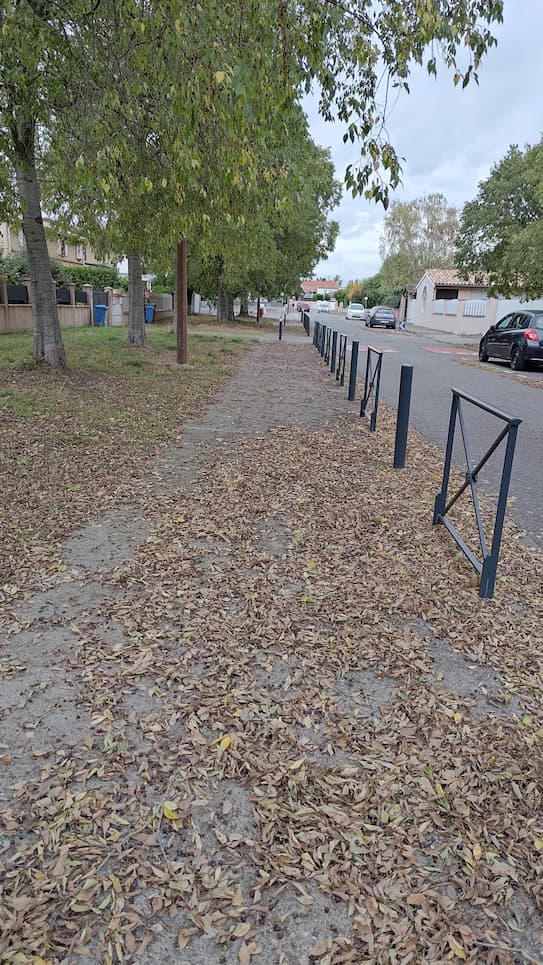
Simplistic Vision vs. Complex Reality
Yes, trees provide shade in summer. Yes, they can reduce local temperature by a few degrees. These facts are undeniable and constitute the main argument of urban greening advocates. But as often in economics and public policy, what is easily seen masks what is not seen — to borrow Frédéric Bastiat's famous distinction.
Let's take the concrete example of a typical urban park. On the surface, it seems idyllic: benches in the shade, coolness during heat waves. But let's observe more carefully the actual use of this space. The shade that protects from summer sun also attracts mosquitoes, making the park unusable precisely during the hours when citizens want to enjoy it after work. Even more problematic: this same shade becomes an obstacle in spring and autumn, when people are precisely seeking sunlight to extend the beautiful days. Result? The benches end up desperately empty during these seasons, transforming an expensive public facility into unused urban furniture.
A simple but revealing observation: in any park, the benches and picnic tables actually used by visitors are always those located in the sun, rarely those in the shade. When people go out, it's to be in the sun and get fresh air, not to stay in the shade. And when it's really too hot and the sun beats down too hard? They simply stay home rather than sit on a bench in the shade of a tree where the temperature is still too hot.
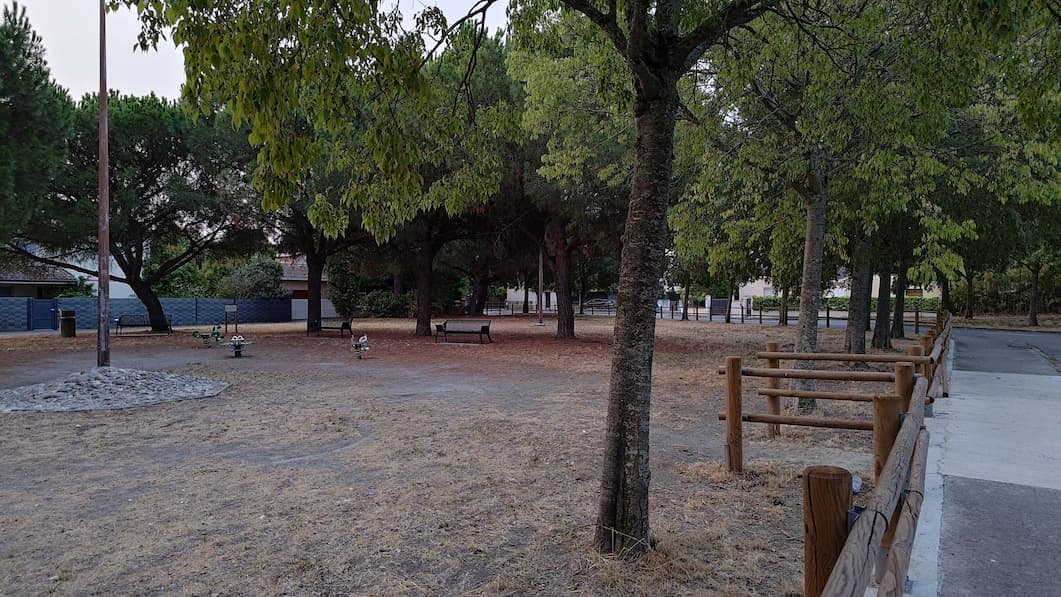
The Illusion of Marginal Impact
But there's an even more fundamental reality that urban planners prefer to ignore: our cities are already largely tree-lined. Walk through any residential neighborhood and count the trees. They're everywhere: in private gardens, along streets, in existing parks, on public squares. Of course, you can always find a few additional spots here and there, but the marginal impact of these new trees on the city's overall temperature is negligible.
During a heat wave, when the thermometer shows 38°C, planting a few dozen additional trees won't bring the temperature down to 35°C. The effect will be imperceptible, lost in the urban thermal mass. It's summer, it's hot, it's normal. If you really want to cool down, there's only one effective solution: turn on the air conditioning and stay inside.
This truth disturbs because it contradicts the dominant ecological narrative, but it corresponds to the daily experience of millions of city dwellers. When it's really too hot, even the most shaded parks empty out. People no longer go out, they no longer frequent green spaces. They take refuge in air-conditioned environments: shopping centers, libraries, their homes.
Hidden Costs: Incomplete Accounting
Enthusiasm for urban trees reveals a fundamental misunderstanding of what their management actually entails. Each planted tree represents a multi-year financial commitment that few elected officials dare to publicly quantify.
Processionary caterpillars, for example, require expensive specialized treatment of each tree in spring. In a medium-sized metropolis, this represents thousands of technical interventions. Have you ever calculated the cost of this single operation across an entire city? Bird droppings regularly transform public benches into unusable furniture, requiring constant cleaning that municipal budgets often struggle to ensure.
Each storm reveals the fragility of these urban giants. Falling branches require rapid intervention across the territory, mobilizing specialized teams and considerable logistical resources. Who really counts these work hours multiplied by thousands of trees? These costs, scattered across various budget lines, often escape the global economic analysis of greening policy.
Let's take another concrete example: trees planted on road edges. They do indeed provide appreciable shade for cars parked in summer. But owners quickly discover that their vehicles end up covered in bird droppings, to the point that some deliberately avoid these parking spots despite their convenience. Ironically, this "green development" becomes counterproductive.
The Irony of Green Bike Paths
The intersection between two popular public policies — trees and bike paths — reveals particularly enlightening contradictions. Urban planners love to border bike paths with trees: it's aesthetic, it's "green," it's politically appealing.
But ask a regular cyclist — not the executive who takes out their electric bike twice a month when the weather is nice — what they think of these developments. In autumn, dead leaves transform paths into skating rinks. Thorns from certain species regularly puncture tires. Dead branches create permanent obstacles.
Even more insidious: tree roots progressively destroy bike path surfaces, creating bumps and deformations that require regular ground renovation. When these deformations are covered with dead leaves, they become invisible and particularly dangerous for cyclists. How many falls could have been avoided with more thoughtful planning?
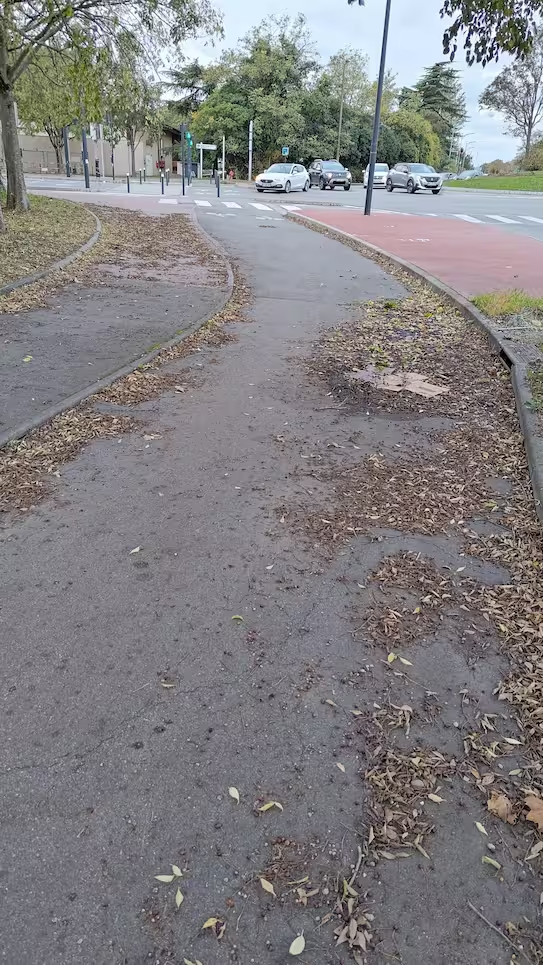
The paradox is striking: a policy supposed to encourage cycling creates conditions that discourage its regular practice. But since decision-makers rarely evaluate the real effectiveness of their measures, this contradiction persists.
The Wisdom of the Private Sector
Observing private gardens offers an instructive contrast. Property owners, who directly bear maintenance costs, generally adopt a much more measured approach. They plant a few trees, often modest in size, and especially position them strategically so as not to deprive their living spaces of sun in spring and autumn. These trees are generally placed in corners of the garden, occasionally serving as canopy in summer, but without compromising sun exposure when it's desired.
This difference isn't accidental. It reflects the fundamental difference between those who directly pay the consequences of their choices and those who can socialize costs while reaping the political benefits of "good intentions."
For a Realistic Approach
This doesn't mean all trees should be banned from cities. But it implies abandoning the simplistic approach that only sees benefits to adopt a rigorous cost-benefit analysis.
The essential thing is to systematically measure the pros and cons of each measure. Nothing is perfect in urban planning, and everything has advantages and disadvantages. The question isn't whether trees are "good" or "bad," but determining where, when, and how their net benefit is actually positive.
Conclusion: Beyond Slogans
The question of urban trees illustrates a broader problem of our era: the tendency to confuse virtuous intentions with actual results.
A good public policy must examine its effects on all concerned groups and over the long term, not just its immediate and visible benefits. Urban trees, like any public policy, deserve this intellectual requirement.
Do citizens really deserve urban policies based solely on good intentions? Wouldn't it be time to demand an honest analysis of costs and benefits before each decision? These questions are disturbing, but they're necessary if we want to build cities that truly work for those who live in them.